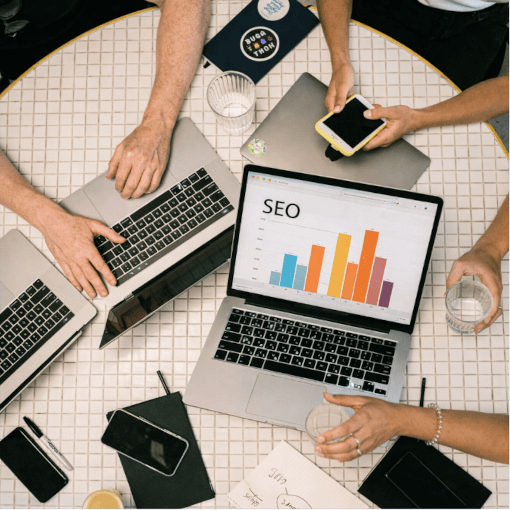
Not all marketing problems are solved with tactics. Many require better strategy, clearer thinking, and a stronger understanding of how growth actually works. In this section, we share insights, trends, and lessons that help business owners make more informed decisions.

You will find content on digital marketing strategy, industry shifts, brand positioning, and the key factors that influence long-term business growth. These articles are designed to challenge assumptions, provide clarity, and help you focus on what truly drives results.

If you want to step back from day-to-day marketing tasks and think more strategically about your business, this is where you will find that perspective.

How to Future-Proof Your Business for the AI Revolution (Before It’s Too Late)

How to Future-Proof Your Business for the AI Revolution (Before It’s Too Late)

AI is no longer something only big tech companies use. It is showing up in everyday tools that business owners rely on, from email to scheduling to customer questions. The world is moving fast, and most companies simply can’t keep up with how quickly technology is changing. But here’s the good news.

AI isn’t about replacing people or taking over your business. It is about helping you save time, reduce mistakes, and make smarter decisions without working harder. Think of it as finally getting the extra set of hands you wish you had.

Whether you run a service business, an online shop, a contracting company, or anything in between, AI can help you stay organized, communicate faster, and keep customers happier. The key is knowing where to start and how to use it in ways that actually support your day-to-day work.

Before we go any further… How prepared are you for the AI era ?

We created a simple, non-technical checklist that shows you exactly where your business stands today. It takes less than two minutes to complete and gives you instant clarity on what you’re already doing well and where AI could save you hours each week.

1. Marketing Basics and Daily Operations
2. Accuracy and Organized Information
3. Time-Saving and Automation
4. Team Comfort and Understanding
5. Customer Data and Personalization
Check Your Results:

Integrate Smart, Not Fast!

Avoid The “Shiny Tool” Trap.

Start With One Process:

Email Automation, Content Outlines, Chatbot FAQs

Be Patient:

Use tools to enhance your current systems, not replace them.

Create internal guidelines for AI usage:

Tone, brand voice, and ethics.

AI tools for Modern Marketing

Tool

Best for

Key strengths

Ideal use case

ChatGPT

Ideation, scripting, workflows, analysis

Flexible, fast, great at drafts, great for problem solving

Creating outlines, scripts, reports, captions, and workflow frameworks

Jasper

Branded long-form content

Brand voice controls, SEO mode, team collaboration

Producing high-volume blogs, ads, and landing pages with consistency

Midjourney

Creative visuals & custom graphics

High-quality art, consistent style, brandable images

Hero images, thumbnails, social media design, ad creative

Notion AI

Operations & content planning

Summaries, documentation, task automation

SOPs, planning docs, calendars, meeting notes

Perplexity

Operations & content planning

Citation-backed research, accurate summaries

Market research, blog research, quick competitor insights

HubSpot AI

CRM, email marketing, automation

Predictive lead scoring, automated emails, CRM updates, segmentation

Automating follow-ups, managing customer journeys, cleaning data

AI Adoption Fails When Teams Resist It.

Train Your Team, Not Just Your Tech.

Host internal “AI Hours” to explore tools together.

Build a shared AI glossary to demystify jargon.

Reward experimentation and new workflows.

The winning brands of the AI age are not the most automated, they’re the most authentic.

AI optimization is something you grow into.

  • Use AI to sort the data, but let real people tell the story behind it.
  • Keep your messaging human, relatable, and full of personality.
  • Focus on visuals, emotion, and brand identity, the parts AI can’t replace.
  • Pay attention to simple metrics like time saved, customer engagement, and what tasks feel easier now.
  • Try new tools regularly, even if it’s just ten minutes a week.
  • Follow a simple rhythm that any business can manage: Test → Learn → Apply.

AI isn’t the future of business, it’s the present.

The businesses that lean in now will be the ones people remember later. Whether you run a local shop, a service business, or a growing brand, the question isn’t if you’ll start using AI, it’s how much easier your work gets once you do.

Read more: The ASO Checklist: How to Get Your Business Recommended by ChatGPT and Other AI Tools

“AI won’t replace you. The person using AI better than you will.”

Want to discuss your marketing strategies ?

Leave your contact information and our team will get back to you.

What is SEO? Why is it Important?

What SEO Does for Your Business (And Why It Still Matters)

Most business owners know SEO is “important.” Fewer understand why it matters or what it actually does for their business.

SEO is not about gaming Google. It’s about helping the right people find you at the right moment, when they are already looking for what you offer.

When done well, SEO supports steady growth, builds trust, and reduces reliance on paid ads. When done poorly, it becomes confusing, slow, and hard to measure.

This guide explains SEO in simple terms and focuses on what business owners actually care about: results.

Updated : April 20, 2026

What SEO Is in Plain English

Search Engine Optimization helps your business show up when people search for services or products you already provide. It works by improving:

  • How clearly does your website explain what you do
  • How easy it is for search engines to understand your site
  • How trustworthy your business appears online

Good SEO does not chase algorithms. It focuses on clarity, consistency, and relevance.

Why SEO Still Matters for Businesses Today

Search behavior has changed, but intent has not. People still search when they are:

Ready to compare options
Looking for a local provider
Trying to solve a specific problem

SEO matters because it puts your business in front of people with intent, not just awareness. Unlike ads, SEO continues working over time. The effort you put in today compounds instead of disappearing when the budget pauses.

What SEO Does for Your Business

When SEO is working properly, it helps your business:

  • Get found by people actively searching
  • Build credibility through visibility and consistency
  • Increase qualified traffic instead of random clicks
  • Support other marketing channels like ads and content
  • Create long-term growth instead of short spikes

SEO is not a shortcut.

It is infrastructure.

Start With Google Business Profile

If you do one thing for SEO, do this. Make sure your Google Business Profile:

  • Has the correct business name, address, and phone number
  • Includes a clear description of what you do and who you serve
  • Uses real photos, not stock images
  • Is updated with posts or photos at least once a month

Why this works: Google trusts active, accurate businesses. This directly impacts map results and local visibility.

Tip: If your description sounds vague, rewrite it in plain language. Pretend you are explaining your business to a new customer, not to Google.

Check Your Website on Your Phone

Most SEO issues today are mobile issues. Open your website on your phone and check:

  • Does it load quickly?
  • Is the text easy to read?
  • Are buttons easy to tap?
  • Does it feel simple or frustrating?

If it feels annoying on mobile, SEO performance will suffer.

SEO Is Not a One-Time Task

SEO is not about rankings for their own sake. It is about being visible when it matters most.

If your business relies on people finding you online, SEO is not optional. It is foundational.

The right approach brings consistency and long-term value without relying on constant ad spend.

Read more: 7 Practical SEO Tips Tampa |How to Generate More Traffic

You Do Not Need To Optimize Everything At Once.

SEO compounds when actions are consistent.

Want to discuss your marketing strategies ?

Leave your contact information and our team will get back to you.

Rank #1 with our SEO Services- Tampa

SEO Services in Tampa That Build Sustainable Visibility

If you are searching for SEO services in Tampa, you are likely looking for more than traffic numbers on a dashboard. You want your business to appear when potential customers are actively searching. And most importantly, you want those visitors to take action.

For years, SEO conversations centered around “ranking number one.” Today, that mindset is incomplete. Search results are more complex. AI-driven summaries influence decisions before users ever click. Local map listings compete with organic results. Customers compare options faster than ever.

Modern SEO is not about dominating a single keyword. It is about building structured visibility across search environments. Here is how effective SEO actually works in 2026, and what Tampa businesses should expect from a professional strategy.

Updated : April 20, 2026

What SEO Should Deliver for Your Business

Professional SEO services should help you:

  • Increase visibility in local and organic search
  • Attract qualified traffic, not random clicks
  • Strengthen authority in your industry
  • Improve conversion opportunities
  • Support long-term marketing stability

If SEO only increases impressions without increasing action, the strategy needs refinement.

The Shift From Rankings to Visibility Systems

Search behavior has changed. Today’s search landscape includes:

  • Traditional Google results
  • Local map visibility
  • AI-driven search summaries
  • Voice and conversational search

To compete effectively, your SEO strategy must include:

  • Structured website content
  • Clear service positioning
  • Consistent business information across platforms
  • Authority signals and backlinks
  • Ongoing technical optimization

Ranking first for a single keyword does not create growth. A structured visibility system does.

Local SEO for Tampa Businesses

For Tampa businesses, local visibility is critical. A strong local SEO strategy includes:

  • Optimized Google Business Profile
  • Consistent name, address, and contact details
  • Location-aligned service pages
  • Structured local content
  • Review management

Local search often influences purchasing decisions faster than general search results.

Technical Structure Matters

Behind every high-performing SEO strategy is technical precision. Professional SEO services should include:

  • Site speed optimization
  • Clean URL structure
  • Proper indexing and crawlability
  • Mobile-first performance
  • Structured data markup

Search engines prioritize clarity and usability. Technical strength supports both.

Content That Aligns With Search Intent

Publishing more content does not guarantee better SEO. What matters is alignment with search intent. Your content should:

  • Answer real customer questions
  • Reflect on how people actually search
  • Clarify your services
  • Support conversion goals

Effective SEO connects content to business outcomes.

Measuring What Actually Matters

SEO should be tracked using meaningful indicators such as:

  • Qualified organic leads
  • Conversion rates
  • Search visibility growth
  • Cost per acquisition compared to paid channels

Vanity metrics like impressions alone do not reflect business performance.

Is Your Current SEO Strategy Working?

Consider the following:

  • Are you attracting the right type of traffic?
  • Are organic visitors converting?
  • Do you understand which keywords drive business value?
  • Is your website structured to support long-term search growth?
  • Are you consistently visible in local search results?

If these answers are unclear, your SEO strategy may need restructuring.

SEO is not about ranking first. It is about being discoverable, credible, and relevant when your audience is ready to act.

When SEO is structured strategically, it becomes one of your most sustainable growth channels.

Read more: 7 Practical SEO Actions That Help Tampa Businesses Get Found (And Contacted)

Not Sure What Kind Of Marketing Support Your Business Needs?

A short conversation can bring a lot of clarity.

Want to discuss your marketing strategies ?

Leave your contact information and our team will get back to you.

How to Get More Traffic through Marketing Agency?

Why More Traffic Isn’t the Answer (And What You Should Focus On Instead)

If you run a business, you’ve probably thought this at some point:

“If we could just get more people to the website, things would improve.”

It’s a reasonable assumption. But for most businesses, it’s not the real issue. The real problem usually isn’t traffic. It’s what happens after someone lands on your site.

A good marketing agency knows this. That’s why traffic is rarely the first thing they fix.

Updated : April 20, 2026

The Mistake Many Businesses Make

Traffic feels productive because it’s visible. Numbers go up. Reports look better. It feels like momentum.

But more traffic does not automatically mean:

  • More phone calls
  • More form submissions
  • More sales

If visitors don’t clearly understand what you do, why they should trust you, or what to do next, traffic simply leaves faster.

From a business perspective, that’s a wasted opportunity.

The Question You Should Be Asking Instead

Before asking how to get more traffic, ask this:

“Is our website doing its job once people arrive?”

If the answer is unclear, increasing traffic will only magnify the problem. This is where a strong marketing strategy starts.

Why Quality Traffic Matters More Than Volume

From a business owner’s perspective, traffic only matters if it turns into conversations, quotes, or sales.

Quality traffic means people who:

  • Are actively looking for what you offer
  • Understand your service before contacting you
  • Are closer to making a decision

High-volume traffic often comes from:

  • Broad keywords
  • Generic ads
  • Unfocused content

This kind of traffic looks good in reports but rarely produces results.

A simple way to tell the difference is to look at behavior, not numbers:

  • Do visitors stay on the site or leave immediately?
  • Do they visit service pages or just the homepage?
  • Do they contact you with specific questions or vague ones?

When traffic is high quality, fewer visitors are needed to produce real outcomes. When traffic is low quality, no amount of volume fixes the problem. That’s why experienced agencies focus first on who is arriving, not how many.

The Shift That Changes Marketing Results

Instead of asking: “How do we get more traffic?

Ask: “How do we get more value from the traffic we already have?”

That shift alone solves more marketing problems than most new campaigns.


Traffic is attention.

Conversions are decisions.

Traffic Only Matters When The Right Audience Shows Up Ready To Act

Marketing should feel like a tool that supports your business, not a constant expense you hope pays off.

If your marketing feels busy but results feel unclear, traffic is rarely the root issue. Clarity, structure, and conversion come first.

Read more: What is a Click Funnel?

If Your Website Looks Good But Isn’t Converting, It’s Worth A Second Look.

A short conversation can bring a lot of clarity.

Want to discuss your marketing strategies ?

Leave your contact information and our team will get back to you.

Digital Marketing- Tampa | Grow Your Business with Digital Marketing

Digital Marketing That Actually Helps Your Business Grow

Digital marketing is everywhere. Ads, SEO, social media, websites, email, analytics.

For many business owners, it feels like a long list of things you are supposed to do without a clear understanding of what actually moves the business forward. The truth is, digital marketing only works when it is connected to real business goals.

More platforms do not automatically mean more growth. A clear strategy does. This post breaks down what effective digital marketing looks like from a business owner’s perspective and how the right approach turns online activity into real results.

Updated : April 20, 2026

Digital Marketing Is Not a Collection of Tactics

Many businesses approach digital marketing piece by piece. They run ads for a while. Then they try SEO. Then social media. Then a new website. The problem is not effort. The problem is fragmentation.

Effective digital marketing is a system. Each part supports the others:

  • Your website explains your offer clearly
  • SEO helps the right people find you
  • Ads accelerate what already works
  • Content builds trust before the first conversation

When these pieces are disconnected, marketing feels expensive and unpredictable.

What Business Owners Need From Digital Marketing

From a business perspective, digital marketing should do three things:

1. Attract the Right Audience

Not everyone. The people are already searching for or interested in what you offer.

2. Build Trust Quickly

Your website, content, and messaging should answer questions before a sales call ever happens.

3. Turn Attention Into Action

Calls, form submissions, bookings, or inquiries. Traffic alone is not the goal.

If digital marketing is not supporting these outcomes, something is missing.

Where Many Businesses Get Stuck

Most digital marketing problems show up in predictable ways:

  • Website traffic increases, but leads stay flat
  • Ads drive clicks but not conversations
  • SEO rankings improve, but revenue does not
  • Social content gets engagement without impact

These are signs of misalignment, not failure.

Growth stalls when tactics are executed without a clear strategy tying them together.

How Baycoast Media Approaches Digital Marketing

At Baycoast Media, digital marketing starts with transparency. Before running campaigns or building content, we focus on:

  • Understanding your business goals
  • Identifying what is blocking conversions
  • Aligning messaging across platforms
  • Building a system that supports long-term growth

Our services work together, not in isolation:

  • Website design built for clarity and conversion
  • SEO focused on qualified traffic
  • Paid ads used strategically, not blindly
  • Content that supports trust and decision-making

This approach helps businesses grow without constantly chasing the next trend.

Digital Marketing Should Feel Structured, Not Chaotic

When digital marketing is working properly:

  • You understand where leads come from
  • Decisions feel informed, not reactive
  • Marketing supports sales instead of competing with it
  • Growth feels intentional

Marketing should simplify decision-making, not add noise.

Digital marketing is not about doing more. It is about doing the right things, in the right order, for the right reasons.

When strategy leads, and execution follows, digital marketing becomes a growth tool instead of a guessing game.

Read more: Need Help With Digital Marketing in Tampa? Here’s Where to Start

Not Sure What Kind Of Marketing Support Your Business Needs?

A short conversation can bring a lot of clarity.

Want to discuss your marketing strategies ?

Leave your contact information and our team will get back to you.

7 Practical SEO Tips Tampa |How to Generate More Traffic

7 Practical SEO Actions That Help Tampa Businesses Get Found (And Contacted)

Most business owners hear the same SEO advice over and over: publish more content, use more keywords, get more traffic.

The problem is that traffic alone does not grow a business. What matters is being found by the right people at the moment they are ready to take action.

This guide focuses on practical SEO actions that Tampa businesses can realistically implement and that actually support leads, calls, and inquiries, not just rankings.

Updated : April 20, 2026

Before You Start: Reset the Goal of SEO

SEO is not about winning Google. It is about making it easy for the right customers to find and trust your business.

If your website is getting visitors but not conversations, SEO is likely misaligned, not broken.

1. Get Your Google Business Profile Fully Dialed In

This is the highest-impact SEO action for most local businesses. Make sure your Google Business Profile:

  • clearly states what you do and who you serve
  • uses real photos of your team, work, or location
  • is updated regularly with posts or images
  • has accurate contact information everywhere online

Why this matters: For many Tampa searches, Google Maps results appear before websites. If your profile is incomplete, you are invisible where intent is highest.

2. Fix Your Homepage Message First

Your homepage does more SEO work than most blog posts. Ask yourself:

  • Can a visitor understand what we offer in five seconds?
  • Is it obvious who we help and where we operate?
  • Is there one clear next step?

Simple improvement:

Add one clear sentence near the top of the page:

We help [who] with [what] in Tampa.

Transparency improves SEO and conversions at the same time.

3. Use the Same Language Your Customers Use

Many businesses lose SEO value by sounding too generic.

Instead of: “Professional solutions tailored to your needs.”

Use: “We help Tampa businesses get more leads through web design and SEO.”

Apply this language to:

Search engines and AI tools both reward plain, human language.

4. Add One Simple FAQ Section

You do not need dozens of blog posts to improve SEO.

Add an FAQ section that answers:

  • What you offer
  • Who it is for
  • How it works
  • Why someone should choose you

Why this matters: FAQs help search engines understand your business and help visitors feel confident enough to reach out.

5. Make Sure Your Site Works on  Mobile

Most Tampa searches happen on mobile devices.

Check your website on your phone:

  • Are buttons easy to tap?
  • Is the text readable without zooming?
  • Does the page load quickly?

If mobile feels frustrating, SEO performance will suffer no matter how good the content is.

6. Stop Chasing Every Keyword

Not all keywords are equal.

Instead of trying to rank for everything, focus on:

  • Services you actually sell
  • Locations you actually serve
  • Searches that suggest intent, not curiosity

Example:

“SEO tips” attracts learners.

“SEO services Tampa” attracts buyers.

Good SEO prioritizes intent over volume.

7. Track Actions, Not Just Visits

SEO only works if it supports real outcomes.

Track:

  • Calls
  • Form submissions
  • Booking requests

If traffic is going up but actions are not, SEO is pointing people to the wrong place or the website is creating friction.

Quick  SEO Reality Check

Answer honestly:

  • Are we showing up where customers actually search?
  • Does our website clearly explain what we do?
  • Are people contacting us from organic traffic?

If these answers are unclear, SEO needs focus, not more content.

SEO works best when it is practical, focused, and aligned with how customers actually search. If your SEO feels busy but unproductive, the solution is usually not more effort. It is a better direction.

Read more: What SEO Does for Your Business (And Why It Still Matters)

Not Sure What Kind Of Marketing Support Your Business Needs?

A short conversation can bring a lot of clarity.

Want to discuss your marketing strategies ?

Leave your contact information and our team will get back to you.

Top Marketing Trends to look out for in 2021

Marketing Trends That Will Impact Businesses in 2026

Marketing in 2026 is not about doing more. It is about being clearer, faster, and more intentional.

The platforms are louder. AI is reshaping search. Attention spans are shorter. But the businesses that win next year will not be the ones chasing every new tactic.

They will be the ones focusing on what truly affects growth. Here are the marketing trends that will actually matter in 2026, and what they mean for your business.

Updated : April 20, 2026

1. AI Search Is Changing How Customers Discover Businesses

Search is no longer just about Google rankings. AI tools are now answering questions directly. Instead of clicking through pages of results, users are getting summarized recommendations.

What this means for you:

  • Your website must be structured clearly
  • Your messaging must be simple and direct
  • Your business information must be consistent across platforms

If AI cannot understand your business quickly, it cannot recommend it. This is not a future trend. It is happening now.

2. Traffic Is Losing Value Without a Conversion Strategy

In 2026, impressions and visits will matter less than actions. More businesses are realizing that:

  • High traffic does not equal high revenue
  • Clicks without clarity waste budget
  • Ads amplify whatever experience already exists

Websites must be designed for:

  • Transparency
  • Speed
  • Obvious next steps

The shift is from “get more traffic” to “make better use of traffic.”

3. Owned Audiences Are Becoming a Priority

Relying only on social platforms is risky. Algorithms change. Reach fluctuates. Ad costs increase.

Businesses that build:

  • Email lists
  • Communities
  • Direct communication channels will have more stability.

2026 favors businesses that control their audience, not just rent attention.

4. Simpler Messaging Is Outperforming Clever Campaigns

Attention is shrinking. Clear value propositions outperform creative but confusing ones.

In 2026, the strongest brands will:

  • Explain what they do in one sentence
  • Clearly state who they serve
  • Remove unnecessary complexity

Clarity converts faster than creativity.

5. Website Performance Is Becoming a Competitive Advantage

A slow, cluttered website no longer feels neutral. It feels outdated.

Performance now affects:

Fast, mobile-first, structured websites will outperform visually busy ones.

Design is no longer about aesthetics alone. It is about behavior.

6. Data Clarity Beats Data Volume

Businesses are drowning in dashboards.

In 2026, competitive advantage will come from:

  • Understanding what matters
  • Tracking actions, not vanity metrics
  • Aligning marketing metrics with business goals

More data is not the solution. Better interpretation is.

7. Strategic AI Use Will Outperform AI Overuse

AI tools are everywhere. But the businesses that win will not be those who automate everything.

They will:

  • Use AI to improve efficiency
  • Use AI to support research
  • Keep strategy and decision-making human

AI is a tool. Not a replacement for clarity.

Which 2026 Trends Should You Focus On?

Use this quick filter:

If you are a small business:

→ Focus on clarity, mobile performance, and local SEO alignment.

If you are in growth mode:

→ Focus on conversion optimization and owned audiences.

If you are established:

→ Focus on AI visibility and data-driven decision systems.

Not every trend deserves your budget. Prioritize based on your stage.

What This Means for Tampa Businesses

Local competition is increasing. AI search is influencing local discovery. Paid ads are more competitive.

Businesses in Tampa that:

  • Clarify their message
  • Strengthen their website foundation
  • Aligning SEO with real intent will be positioned far better than those chasing trends reactively.

Marketing trends come and go. Clarity, structure, and intentional strategy do not.

In 2026, the businesses that grow will not be the ones trying everything. They will be the ones doing the right things in the right order.

Read more: The ASO Checklist: How to Get Your Business Recommended by ChatGPT and Other AI Tools

Not Sure What Kind Of Marketing Support Your Business Needs?

A short conversation can bring a lot of clarity.

Want to discuss your marketing strategies ?

Leave your contact information and our team will get back to you.

4 Brand Building Moves That Grow Your Business

4 Brand Building Moves That Grow Your Business

Brand building is often misunderstood.

Many businesses think branding means logos, colors, and taglines. Those matters, but they are not the foundation.

A strong brand is what makes people:

  • Recognize you faster
  • Trust you sooner
  • Choose you more confidently

If your marketing feels inconsistent or your competitors seem easier to remember, the issue is rarely effort. It is usually clarity. Here are four brand-building moves that actually move businesses forward.

Updated : April 20, 2026

1. Clarify What You Want to Be Known For

The strongest brands are specific. If your messaging sounds like:

  • “We do it all.”
  • “Full-service solutions”
  • “Customized services”

You are blending in.

Brand clarity starts with one focused statement: We help [who] achieve [result] through [how].

Why this matters: When customers understand you quickly, trust builds faster.

Quick Check: Can someone describe your business in one sentence without guessing? If not, clarity is your first brand move.

2. Align Your Visual Identity With Your Positioning

Visual identity should reinforce what you want to be known for. Your:

should support your positioning, not contradict it.

If you position yourself as premium but your design feels cluttered or inconsistent, the brand signal weakens. Brand perception is formed visually before it is formed verbally.

3. Build Consistency Across Every Platform

Inconsistent branding confuses both people and search systems. Your:

  • website
  • LinkedIn page
  • Google Business Profile
  • social media
  • review responses

should all reflect the same message and tone.

If your website says one thing and your social media says another, credibility drops quietly.

Brand Alignment Check:

  • Is your message the same everywhere?
  • Does your tone shift dramatically between platforms?
  • Do your visuals feel connected?

Consistency builds recognition. Recognition builds trust.

4. Make Your Brand Useful, Not Just Attractive

The most powerful brands provide clarity and value. That means:

  • Educational content
  • Helpful insights
  • Clear explanations
  • Structured messaging

When your brand consistently helps people understand something better, authority grows naturally.

Attractive brands get attention. Useful brands earn loyalty.

Quick Brand Audit

Answer honestly:

  • Is our positioning clear and specific?
  • Does our visual identity support that positioning?
  • Are we consistent across platforms?
  • Does our content demonstrate expertise?

If two or more answers feel uncertain, your brand is likely underperforming.

What Brand Building Really Means in 2026

Brand building is no longer an optional decoration.

In competitive markets like Tampa, strong branding:

  • Reduces price sensitivity
  • Increases referral strength
  • Improves ad performance
  • Supports SEO and AI visibility

Clear brands are easier to recommend, remember, and trust.

Not Sure Where Your Brand Stands?

A brand is not what you say about your business. It is what people understand about it.

When your positioning is clear, your design is aligned, and your messaging is consistent, growth becomes easier because trust is already in place.

Read more: Digital Marketing That Actually Helps Your Business Grow

Not Sure What Kind Of Marketing Support Your Business Needs?

A short conversation can bring a lot of clarity.

Want to discuss your marketing strategies ?

Leave your contact information and our team will get back to you.

Business Survival in 2026: How to Stay Competitive and Keep Growing

Business Survival in 2026: How to Stay Competitive and Keep Growing

In 2026, business survival is no longer about recovering from disruption. It is about staying competitive in a landscape that changes faster every year.

Customer behavior has shifted. AI is influencing discovery. Advertising costs are rising. Attention spans are shrinking. Competition is increasing across nearly every industry.

Businesses that grow in 2026 will not be the ones doing more marketing. They will be the ones doing the right marketing in the right order. Here is what survival and growth require today.

Updated : April 20, 2026

1. Strengthen Your Digital Foundation Before Scaling

Many businesses try to grow before their foundation is stable. If your website is unclear, slow, or difficult to navigate, increasing traffic will only amplify friction. If your positioning is vague, marketing will attract the wrong audience. If your calls to action are weak, engagement will drop. A strong digital foundation includes:

  • A website that clearly explains what you do and who you serve
  • Mobile-first performance and fast load speeds
  • One primary goal per page
  • Clear next steps

Growth without structure creates inefficiency. Structure creates leverage.

2. Align Marketing With Measurable Business Goals

Marketing activity does not equal progress. In 2026, survival depends on aligning marketing with specific outcomes such as:

  • Qualified leads
  • Scheduled consultations
  • Product purchases
  • Client retention

Every campaign should answer a simple question: What business outcome does this support?

If you cannot connect a tactic to a measurable objective, it is likely draining resources. Focus on fewer initiatives with clearer metrics instead of scattered efforts across every platform.

3. Build Owned Visibility Instead of Renting Attention

Relying entirely on social media algorithms or paid ads increases vulnerability. Platforms change. Costs fluctuate. Reach declines. Owned visibility includes:

  • Email lists
  • CRM systems
  • Customer data organization
  • Direct communication channels

Businesses that build direct relationships with their audience reduce dependency on platform volatility and gain long-term stability.

4. Adapt to AI-Driven Discovery

Search behavior is evolving. AI tools are influencing how users discover businesses. Instead of scrolling through links, customers are asking direct questions and receiving summarized answers. To stay competitive, your business must:

  • Use clear, structured language on your website
  • Maintain consistent information across all platforms
  • Publish helpful, educational content
  • Strengthen your authority signals

If AI systems cannot understand or verify your business, visibility decreases. Survival now includes being machine-readable, not just human-readable.

5. Simplify Your Message to Compete for Attention

Attention is one of the most limited resources in 2026. Businesses that try to say everything often end up saying nothing clearly. A strong competitive position requires:

  • A concise value proposition
  • A defined target audience
  • Consistent messaging across platforms

If a customer cannot explain what you do after visiting your site, your messaging is too complex. Clarity accelerates trust. Trust accelerates decisions.

6. Invest in Brand Equity for Long-Term Growth

Brand strength reduces acquisition costs over time. When your brand is recognizable and credible:

  • Ads convert more efficiently
  • Referrals increase
  • Customers choose you faster
  • Price sensitivity decreases

Brand building is not separate from survival. It strengthens every other marketing effort.

What This Means for Tampa Businesses

Business survival in 2026 is not about aggressive marketing. It is about strategic alignment.

When your digital foundation is strong, your messaging is clear, your systems are structured, and your visibility is intentional, growth becomes more predictable.

The businesses that remain adaptable and focused will not just survive. They will lead.

Read more: The ASO Checklist: How to Get Your Business Recommended by ChatGPT and Other AI Tools

Not Sure What Kind Of Marketing Support Your Business Needs?

A short conversation can bring a lot of clarity.

Want to discuss your marketing strategies ?

Leave your contact information and our team will get back to you.

Go to Top